The first time you back a boat toward a Mediterranean quay, half the harbour stops to watch. Not out of admiration. Out of insurance interest. Stern-to mooring looks like chaos from the outside: an anchor running out ahead, two lines going ashore, a coil of rope on the concrete, and a stranger on the wall pulling the wrong end.
It isn't chaos. It's a routine built around four or five knots, and once you know which one belongs where, the whole manoeuvre goes quiet. What follows is the working set — the knots you will actually use, from Split to Siracusa, plus the small habits that keep them from embarrassing you at two in the morning.
The Setup You're Tying Into
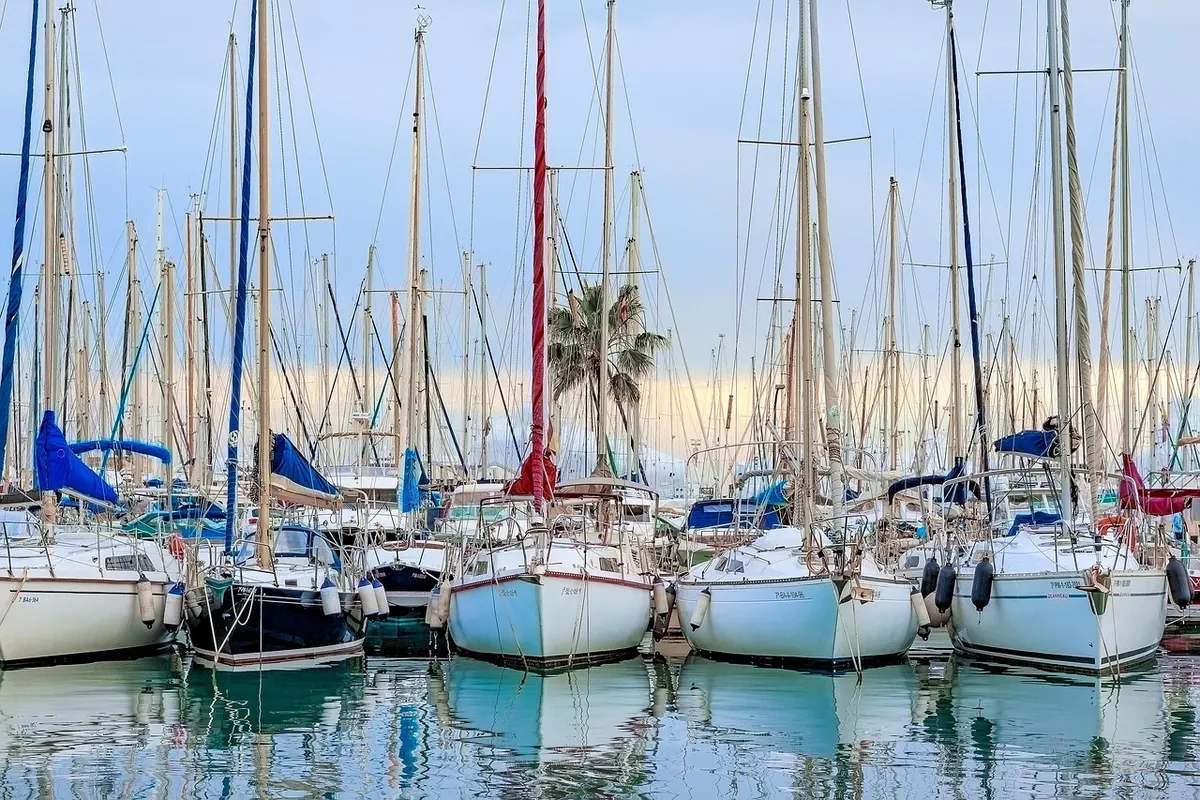
Most Mediterranean berths are bow-to or stern-to: the boat sits perpendicular to the quay, held at the front by the anchor (or by a lazy line) and at the back by two lines to bollards, rings, or iron staples set into the stone. The anchor takes the pull; the stern lines keep the transom off the wall and the boat pointing into the weather.
That split matters for your knots. A stern line rarely sits still. It surges as the boat works, slackens when the wind drops, then loads up hard when an afternoon breeze fills the harbour. Anything you tie must be adjustable under load, releasable in the dark, and kind to the rope. A knot that jams into a concrete-tight ball after an hour of surging is a knot you will cut off with a knife, in front of an audience.
Two practical notes before the knots. Every knot costs a little strength in the line — a bowline or a hitch can take a noticeable bite out of the rope's rated breaking load, so leave margin and avoid sharp angles over the quay edge. And Mediterranean quay stones eat lines. Ten centimetres of plastic tube or a proper anti-chafe sleeve where the rope crosses the wall is worth more than any clever knot.
The Four Knots That Do Real Work
Cleat hitch
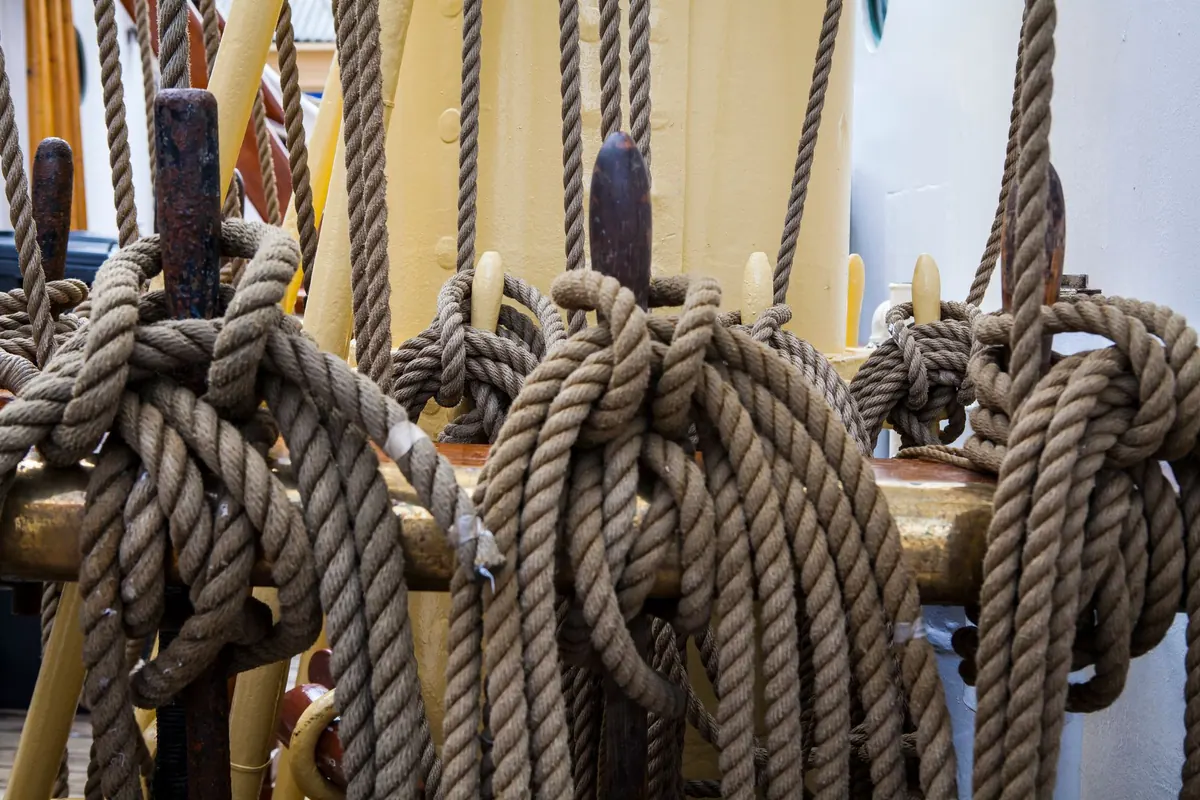
For any proper cleat, ashore or aboard. Lead the line from the direction of the load, take one full turn around the base of the cleat, then figure-eight over both horns. Finish with a locking hitch: a half hitch made by folding the bight so the tail lies alongside the standing part, pulled snug. Two or three turns are plenty. Do not stack five or six half hitches on top — that is how you invent a knot that will not come apart when the marinero wants you to move.
Round turn and two half hitches
The workhorse for rings, staples, and fat stone bollards with no horns. Take a full round turn around the bollard so the friction carries the load, then two half hitches around the standing part. The round turn is the whole point: it lets you hold a loaded line by hand and ease it out a centimetre at a time. On slippery modern braid, add a third half hitch, or finish the second one the opposite way round.
Bowline
A fixed loop that will not jam, useful when you want to drop a loop over a bollard ashore or pass a line to someone on the wall. The tail should end up inside the loop. If you can only tie one knot with gloves on and spray in your eyes, make it this one — but do not leave a bowline looped over a short bollard where the boat can surge hard. A loop can lift off. Bitter end through the loop, or a second line as a backup, kills that risk.
Rolling hitch
The one nobody teaches and everybody needs. Two turns around the standing part of a rope in the direction of the pull, then a half hitch, and it grips when loaded and slides when slack. Use it to take the strain off a stern line that has jammed on a bollard: clip a spare line onto the loaded one, winch it tight, and the original can be eased. Also excellent for hanging a fender from a guardrail without a knot that marks the paint.
Handling a Lazy Line Without Drama
In many Greek and Turkish harbours, and in plenty of Italian ones, you will not use your anchor. Instead you pick up a lazy line — a mooring line laid permanently from the quay to a heavy sinker on the harbour bed, ending in a small buoy or a thin pick-up rope.
- Approach slowly, and be ready to abort. Wind and current decide the angle far more than your engine does.
- Fish the pick-up rope out with a boat hook. Never reach into the water with your fingers and never wrap a line around your hand.
- Lead the lazy line forward, outside everything, to a bow cleat. Take it with a round turn and two half hitches, not a neat decorative knot.
- Take up slack until the boat is held off the wall, then set your two stern lines — one long, one short, so the boat sits at a slight angle like her neighbours.
- Set the lines, stop the engine, and only then start tidying.
Joining Lines and Adjusting Under Load
Sometimes a stern line is too short. The temptation is to bend another onto it with whatever knot comes to mind — usually a reef knot, which capsizes and jams and should stay where it belongs, on sail ties. Use a double sheet bend instead: it holds between lines of different diameter, which is exactly the situation you are in, and it comes apart after loading.
If you need a loop in the middle of a line — to take a second stern line, to shorten a line without untying it, or to isolate a chafed section — an alpine butterfly gives you a fixed loop that loads in three directions without distorting the rope. Pair it with a rolling hitch and you can build a tidy, adjustable spring line out of what you already have aboard.
What Not to Do at the Quay
- Don't leave a clove hitch as your permanent mooring. It is quick, and it works loose. Fine for thirty seconds; not for a week.
- Don't drop a plain loop over a short bollard when the boat can surge and lift it off.
- Don't lead a stern line through a fairlead or over the wall without chafe protection and a second look.
- Don't leave a tail hanging in the water. It will find the propeller eventually.
- Don't assume your neighbour's knots are correct just because he has been there since Tuesday. Watch how his lines sit at dusk.
- Don't guess at local practice. Harbour rules, moorings, and even which bollard you may use vary from port to port; the harbour office or the marinero will tell you, usually in fewer words than you expect.
The Two-Minute Check Before You Leave the Boat
Walk the lines once, from bow to stern. Look at each knot, not at the view. Is the tail through the locking hitch? Is the line bearing on stone or on a fairlead? Is there any give left to ease when the wind pipes up this afternoon? Give each line a firm pull to confirm it is not fouled on something below, and check where the chafe sleeve is sitting now rather than where you put it this morning — lines creep.
Then look at the weather for the next twelve hours and at the boats either side. If the forecast says a strong afternoon breeze, add a spring line before it arrives, not after. And learn four knots properly rather than twenty badly. The harbour at dusk is a poor classroom, but a very good exam.
Photo: Medienservice / Pixabay